
Best Short Walking Routes for a Misty Morning
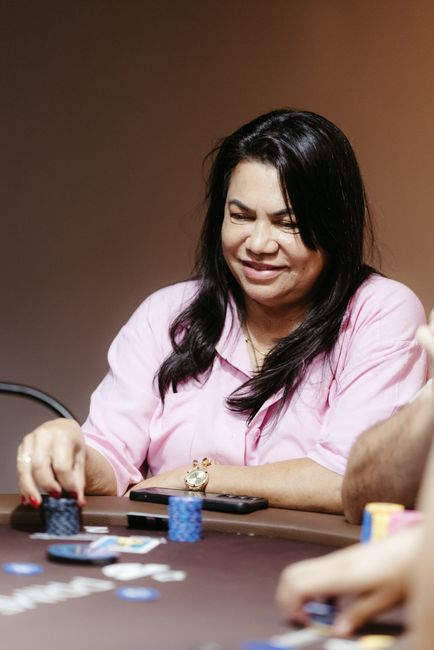
You know that feeling when you’re three hours into a poker session, up two buy-ins, and you start to believe you’ve cracked the code? Then the deck slaps you back to reality. That’s iGaming in a nutshell—it’s not just luck, it’s a mental grind with real edges if you know where to look. And in 2025, the landscape has shifted in ways both subtle and massive. Whether you’re spinning slots at 2 a.m., grinding micro-stakes online, or chasing value on a Sunday football slate, the tools and traps have never been more sophisticated. Let’s cut through the noise.
The Slot Machine Myth That Still Costs You Money
Walk into any casino—physical or digital—and you’ll hear the same old story: “This machine is due for a payout.” It’s the gambler’s version of a rain dance. Here’s the hard truth: modern slots use random number generators (RNGs) that spin millions of outcomes per second. Each spin is independent. The machine doesn’t know it’s been cold for an hour, and it doesn’t care.
But that doesn’t mean all slots are equal. Far from it. The key number is RTP—return to player. A slot with 96% RTP returns $96 for every $100 wagered over millions of spins. That 4% house edge is your real opponent. Compare that to a slot with 92% RTP, and you’re bleeding an extra $4 per $100—a massive difference over a session.
So what should you actually do? It is also worth checking tylenhacai.org.mx before deciding.
- Check the RTP before you play. Most reputable online casinos list it in the game info. If they don’t, move on.
- Volatility matters more than RTP for your bankroll. High-volatility slots (like Book of Dead) pay big but rarely. Low-volatility slots (like Starburst) pay small but often. Match volatility to your patience and bankroll.
- Set a loss limit in the app. Not a mental note. A hard stop. The moment you break it, you’re not gambling—you’re chasing.
One more thing: those “near miss” animations? They’re designed to trigger dopamine. A 2023 study from the University of Waterloo found that near misses activate the same brain regions as actual wins. Once you know that, they lose their power.
Poker in 2025: The Solver Revolution Ate the Fish
Ten years ago, you could beat $1/$2 online with solid fundamentals and a bit of table feel. Today? Not a chance. Solvers—software that calculates game-theory-optimal (GTO) strategies—have trickled down from high-stakes pros to micro-stakes regs. The result: the average opponent is tougher than ever.
But here’s the counterintuitive part: GTO isn’t the be-all and end-all. In fact, many winning players now use a hybrid approach. They study solvers to understand why certain lines are optimal, then exploit population tendencies. For example, most low-stakes players under-bluff rivers. So instead of bluff-catching with a marginal hand, you fold. That single adjustment can swing your win rate by 2-3 BB/100.
If you’re serious about poker, here’s a practical routine:
- Track every session. Use a HUD (heads-up display) like PokerTracker or Hand2Note. If you’re not tracking, you’re guessing.
- Review three hands after each session. Not ten. Three. Pick the biggest pot you lost and the biggest you won. Ask: was my decision process sound, regardless of result?
- Study one solver spot per week. For example, button vs. big blind single-raised pots. Master it before moving on.
- Play fewer tables. Two tables with full attention beats six tables on autopilot. Your win rate will thank you.
And for the love of all that’s holy, stop limp-calling with ace-rag from early position. That’s not a strategy; it’s a donation.
Sports Betting: Where the Sharp Money Actually Lives
Sports betting has exploded in the U.S. since the 2018 Supreme Court ruling, and the flood of new bettors has created inefficiencies. But not the ones you think. The public loves favorites, parlays, and primetime games. That means the value often sits on underdogs, unders, and less popular leagues.
Consider this: in the 2024 NFL season, underdogs covered the spread in 54% of games. That’s not a massive edge, but over 100 bets, it’s the difference between profit and loss. The catch? You need discipline. Most bettors can’t stomach taking the Jaguars +7 on the road against a Super Bowl contender. It feels wrong. That’s exactly why it works.
Three concrete tips for 2025:
- Shop lines. The difference between -110 and -105 on a $100 bet is $4.50 per win. Over 500 bets, that’s over $2,000. Use odds comparison sites.
- Fade public teams. When 80% of bets are on the Chiefs, the line moves. You’ll often find value on the other side.
- Live betting is not for beginners. The odds move fast, and the algorithms are sharp. Master pre-game betting first.
Also, don’t fall for “risk-free” bets. They’re not risk-free—they’re risk-reduced. Read the terms. You usually have to bet the bonus multiple times before withdrawing.
Bankroll Management: The Boring Skill That Prints Money
Every iGaming expert will tell you the same thing, and they’re right: bankroll management separates winners from busted accounts. But what does it actually look like?
For slots, never bet more than 1% of your total bankroll per spin. If you have $500, that’s $5 max. For poker, 5% per buy-in is aggressive; 2% is safer. For sports betting, 1-2% per wager. These aren’t arbitrary numbers—they’re based on the Kelly Criterion, a formula that maximizes growth while minimizing ruin.
Here’s a simple test: if losing ten bets in a row would make you quit, your bet size is too high. Variance is brutal. Even a 55% win rate can produce a 10-loss streak once every 1,024 sequences. It happens. Be ready.
The Bottom Line: Treat iGaming Like a Skill, Not a Lottery
Look, nobody logs into a casino or poker room to do homework. But the players who consistently win—or at least lose less—are the ones who treat it like a craft. They understand RTP, they study solver outputs, they track their bets, and they manage their bankroll with the same discipline a day trader uses. The house edge is real. You can’t erase it. But you can avoid the sucker bets, the emotional decisions, and the “due for a win” traps. That’s not just smart—it’s the only way to stay in the game long enough to enjoy it. So next time you fire up a slot or post a blind, ask yourself: am I playing, or am I just paying?
LEAVE A COMMENT