
Reading the Landscape on a Gentle Valley Walk
Why the crowds always seem to be in the same place
Almost every popular walking area in Britain follows the same pattern. A single car park, one celebrated viewpoint, and a path wide enough for a pushchair. Everyone arrives between eleven and three, walks for forty minutes, photographs the view, and drives home. The result is a bottleneck that feels busy even when the surrounding hills are completely empty.
Understanding that pattern is the whole trick. Crowds are not spread evenly across the landscape; they cluster in time and space, and both of those things are yours to work around. The quiet is usually only a mile, an hour and one decision away.
Start earlier than feels reasonable
The single most effective change is timing. Arriving at first light gives you the car park, the path and the best of the light to yourself. In midsummer that can mean a 5am start; in January, 8am is comfortably early. Check sunrise the night before and aim to be walking twenty minutes before it.
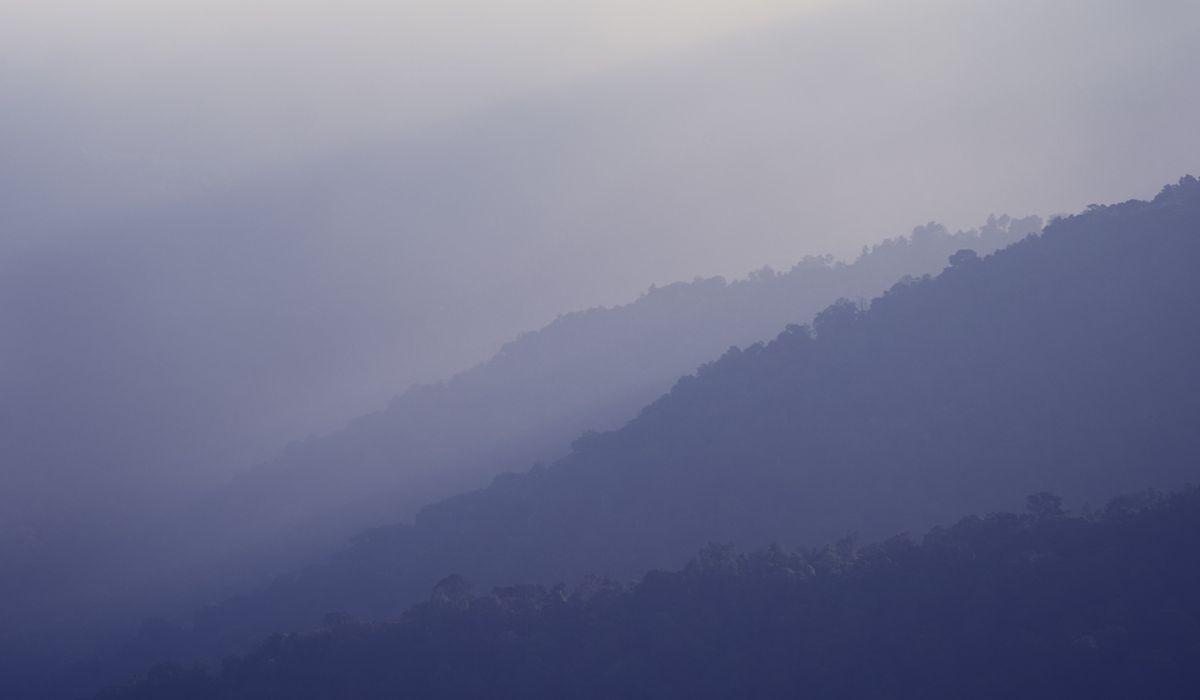
Early mornings are not just quieter. They are better. Mist sits in the valleys, deer and hares are still out, and birdsong is at its densest in the first hour after dawn. You also get the practical wins: no parking faff, no queue for the gate, and the whole day still ahead of you.
- Pack the night before so you can leave without thinking.
- Take a head torch in winter and a flask of something hot.
- Tell someone your route and rough return time.
- Park considerately — village verges and passing places are not car parks.
Take the second path, not the first
At every junction, ask yourself which way most people are going, then don't go that way. Promoted, waymarked trails are designed to funnel walkers along a single line. A detailed walking map tells a different story: a web of dashed footpaths, bridleways and green lanes that most visitors never touch.
Look for paths that are linear rather than circular. A route that goes out and back along the same line puts people off, which is exactly why it stays quiet. Ridge paths thin out faster than valley paths, and anything involving a stile, a steep pull or a bit of bog will halve the footfall within a few hundred metres.
If you are already on a busy path, try walking perpendicular to it for ten minutes. Turn off at the next gate, follow the field boundary, and you will often find yourself alone with a view that nobody else has bothered to reach.
Walk a little further than everyone else
Most day walkers stop at the named feature: the summit, the waterfall, the famous viewpoint, the bench with the plaque. Passing those points and continuing for another twenty or thirty minutes is the simplest way to find silence. Beyond the last gate and the last picnic table, the path narrows, the grass grows longer, and the noise drops away.
Think in terms of thresholds. The first kilometre from the car park is always the busiest. The second thins out. By the third, you are usually on your own. Give yourself permission to walk past the thing you came to see and keep going for a while — the reward is often a better, quieter version of it further along.
Slow down, and let the quiet do its work
Solitude on the trail is not only about other people. It is about the pace you keep. Most of us walk too fast, heads down, treating the route as a task to be completed. Slow travel means dropping to around two miles an hour — a twenty-minute mile — and letting the landscape set the rhythm rather than your watch.
- Pause every twenty minutes, even briefly. Stop properly every hour.
- Sit still for ten minutes somewhere just off the path. Wildlife forgets you surprisingly quickly.
- Switch the phone to aeroplane mode and carry a paper map.
- Try a longer out-breath than in-breath when you feel your shoulders creeping up.
- Name five things you can hear, then five you can smell. It resets a busy head fast.
This is where the wellbeing benefits live. Not in the distance covered, but in the attention you pay. A three-mile walk taken slowly, with stops, will do more for you than a rushed ten.
Small habits that keep the trails quiet
Choose your days deliberately. Midweek beats weekends, and February beats May. Wet weather is your friend: a soft, drizzly Tuesday in a beech wood is one of the most peaceful places in Britain, and the rain keeps almost everyone else indoors. Avoid bank holidays, bluebell weekends and the week the autumn colours peak.
Pick the unglamorous car park. The small, unsigned one at the end of a lane is often empty, even when the main one half a mile away is full. Check that you are on a genuine public right of way, close every gate behind you, keep dogs close near livestock, and take everything home with you.
Do all of this and you will find that the popular countryside is not actually crowded. It is simply concentrated — and with an early start, a turning nobody else takes, and an extra mile in your legs, you can step out of that concentration entirely.
LEAVE A COMMENT