
Taking the Sleeper Train to a Remote Walking Base
The Camera Is Not the Experience
You have probably done it. You round a bend on a footpath in the Peak District, the valley opens up, and within eight seconds you are crouched behind a viewfinder adjusting exposure. By the time you stand up, the cloud has shifted, your knees ache, and you cannot quite remember what the air smelled like. You have a photograph. You have not really been there.
This is not an argument against photography. It is an argument against letting the camera stand between you and the landscape you travelled to see. Slow travel is about duration and attention, and attention is a limited resource. Every second spent composing is a second not spent listening to a woodpecker or watching a dipper work a shallow riffle. The trick is not to stop taking pictures. It is to take far fewer, and to make the ones you do take count.
Decide What You Are Looking For Before You Raise the Camera
Most over-photography happens because we arrive with no intention. Without a brief, every mossy wall and stone stile looks like it deserves recording. Set yourself a simple aim for the walk before you leave the cottage.
- Colour: today I am only photographing things that are one particular shade of green or rust.
- Texture: bark, lichen, wet slate, wool caught on a fence, the surface of a still tarn.
- Light: only the way low sun passes through a beech canopy, or only shadows on a path.
- One subject: a single tree through the day, revisited from four different places.
A brief does two things. It slows the shutter finger, and it gives you something to look for that is not a "view". In practice, a walk with a texture brief will have you noticing the grain of a gatepost or the faint map of a dried puddle — details you would have walked past while hunting a panorama.
Chase Light and Texture, Not Landmarks
In the British countryside, the postcard shot is usually the least interesting thing on offer. Landmarks are already photographed a thousand times a day. Light is not. Light is local, momentary and yours.
Learn to read it. In winter, the sun sits low from about ten in the morning until two in the afternoon, raking across fields at an angle that turns every tussock of grass and ridge of plough soil into something sculptural. In summer, the interesting hours are the two either side of sunrise and sunset; the middle of the day flattens everything into a bright, bland sheet. Overcast weather is not bad weather — it is soft, even light, ideal for woodland, waterfalls and close work on wet leaves.
When you do find good light, spend longer in it. Sit down. Watch how it moves across a hillside over twenty minutes, and photograph one small, specific thing rather than the whole scene.
The Three-Photograph Rule
Here is a practical constraint that works well on a day walk. Allow yourself three photographs. That is it. If a fourth opportunity appears, you must delete one, or wait until tomorrow.
The effect is immediate and slightly uncomfortable. You stop photographing reflexively and start deliberating. You ask whether this is really the frame. You walk around the subject. You wait for the cloud to move. You might take ten minutes over a single image, and in those ten minutes you will have noticed far more than the picture itself — the sound of a curlew, the smell of wet bracken, the way the wind changes direction as it funnels through a gap in the wall.
If three feels too austere, try one photograph per hour instead. Either way, the camera becomes a considered tool rather than a nervous habit.
Put the Camera Down: The Thirty-Second Pause
Before you lift the camera, stand still for thirty seconds and do nothing but look. No framing, no exposure decisions. Just take in the whole field of view, then let your eyes settle on whatever holds them.
Then take the picture. Then, immediately afterwards, put the camera away — bag, pocket, strap over the shoulder — and stay in the same spot for another minute. This second pause is the one people skip. It is also where the memory actually forms. Without it, the photograph becomes the memory, and a photograph is a poor substitute for the smell of a pine wood after rain.
Two or three of these pauses in a day's walk will do more for your sense of wellbeing than an entire memory card of images. Slow travel works on the same principle: repetition, stillness, and unhurried attention.
Weather, Seasons and Going Home with Something True
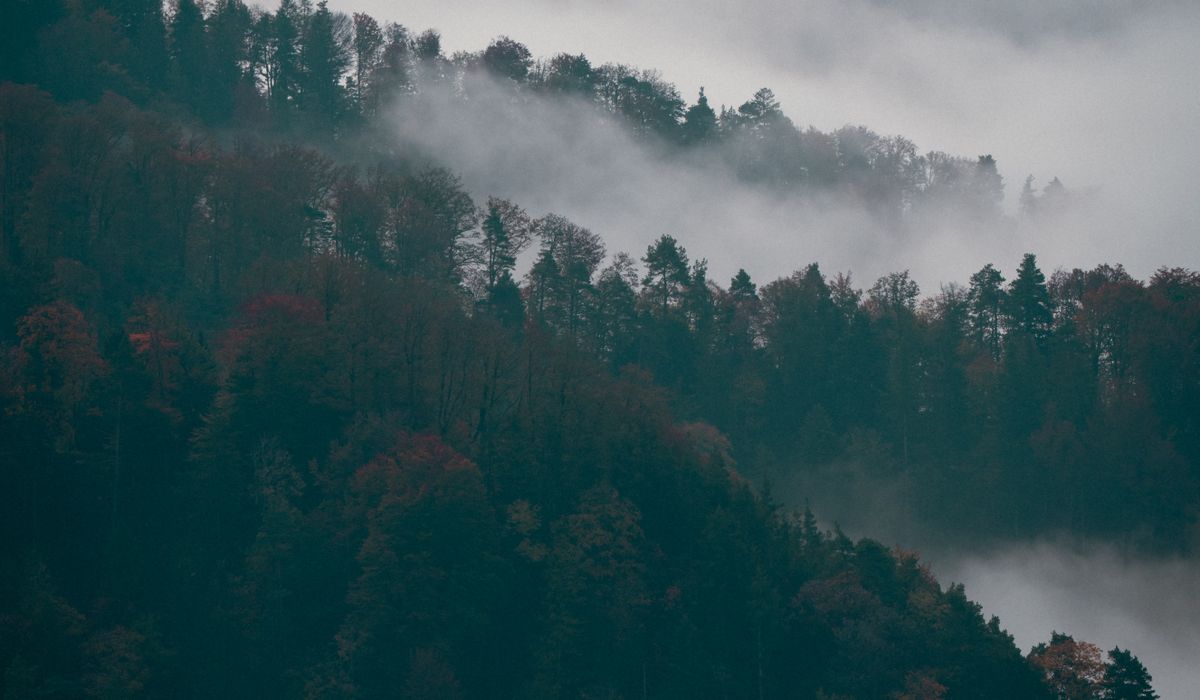
British weather rewards patience. Mist on a river valley at dawn will usually lift into something remarkable within the hour. A rain shower on a beech hedge turns every leaf edge silver. Snow transforms an ordinary field boundary into a drawing. Rather than waiting for a fine day, dress properly — waterproofs, warm layers, decent boots — and go out in whatever the forecast offers. Some of the best light of the year arrives in the twenty minutes after rain stops.
Back at your retreat, spend a little time with the day's handful of images. Note what drew you to each one. You will probably find that your best picture is not the widest view, but the small, quiet thing you almost missed — a detail of texture or light that no one else stopped for.
That is the whole practice in one sentence: photograph less, notice more, and let the countryside do its work on you. The pictures will be better. More importantly, so will the walk.
LEAVE A COMMENT