
Why a Rainy Day Can Improve Your Countryside Stay
Why the branch line is the real destination
Most journeys are a price you pay to arrive somewhere better. Slow travel by train to a rural village quietly reverses that. The two-carriage unit that leaves the main line at a junction and creaks off through fields is not the tedious bit before the holiday — it is the first act of it.
Branch lines survive because people still need them, and they reward anyone who chooses them deliberately. They run at walking pace through places the motorway never touched: water meadows, level crossings with names on them, a halt where the sign says alight here for the footpath. Think of the trip as three parts — the main line, the branch, and the walk from platform to lane — and plan each with the same care.
Planning a journey with room to breathe
The trick is to stop optimising. Fastest route, fewest changes and tightest connection are the habits of a commute, and they work against everything a slow journey is for.
- Choose a village with its own station. A halt two miles from the pub is still a village arrival; a station ten miles away means a taxi and a car journey you were trying to avoid.
- Allow one more change than you need. An extra connection at a junction is not a delay. It is a chance to sit on a bench with a flask and watch the light change.
- Travel midweek and mid-morning. Off-peak branch trains are quiet, cheap and almost never full. Sunday services are often sparse or non-existent, so check before you commit.
- Check for request stops. On some lines the train only stops if you ask the guard, or hold out a hand on the platform. Learn the rule before you travel, not as the train sails past.
- Buy flexible where you can. A walk-up off-peak return costs more than an advance single, but it buys you the freedom to miss a train on purpose. A railcard often pays for itself in two rural trips.
The long quiet wait is not wasted time
A forty-minute wait at a country junction is the part most people try to eliminate. Don't. Rural stations are often the most peaceful places in the parish: a bench, a planter someone still waters, a noticeboard advertising a village fete three weeks gone, and the smell of creosote and wet gravel.
Fill that time gently rather than urgently. Read a chapter. Write three lines in a notebook. Walk to the end of the platform and count how many bird species you can hear — a robin, a blackbird, the distant churr of a pheasant. Some former waiting rooms have been turned into small community cafés serving tea and cake on trust; others have nothing at all, which is its own kind of luxury. Either way, resist the phone. The point of the wait is that nothing is required of you.
Travelling light, and travelling well
Slow travel falls apart if you are hauling a suitcase over a stile. Pack as though you will be walking the last mile, because you almost certainly will be.
- A 30-litre rucksack that leaves both hands free for gates, maps and railings.
- Layers and a proper waterproof. Country platforms are exposed, and weather turns on a sixpence.
- A flask, a water bottle and real food. Buffets and shops are rare; a station might have a ticket machine and nothing else.
- A little cash for the village shop, the honesty box and the pub that has not yet joined the modern world.
- A printed timetable and a charged power bank. Signal in valleys is unreliable, and a dead phone at dusk is a genuine problem.
From platform to path: the last mile
Most rural stations sit a short, pleasant walk from the village centre, and many connect directly to public footpaths. Ask your accommodation in advance whether the lane has a pavement — some do not, and a torch matters in winter. Arrive in daylight where you can. If the walk is more than a mile and you are carrying bags, one short taxi booked ahead is a reasonable compromise, not a failure.
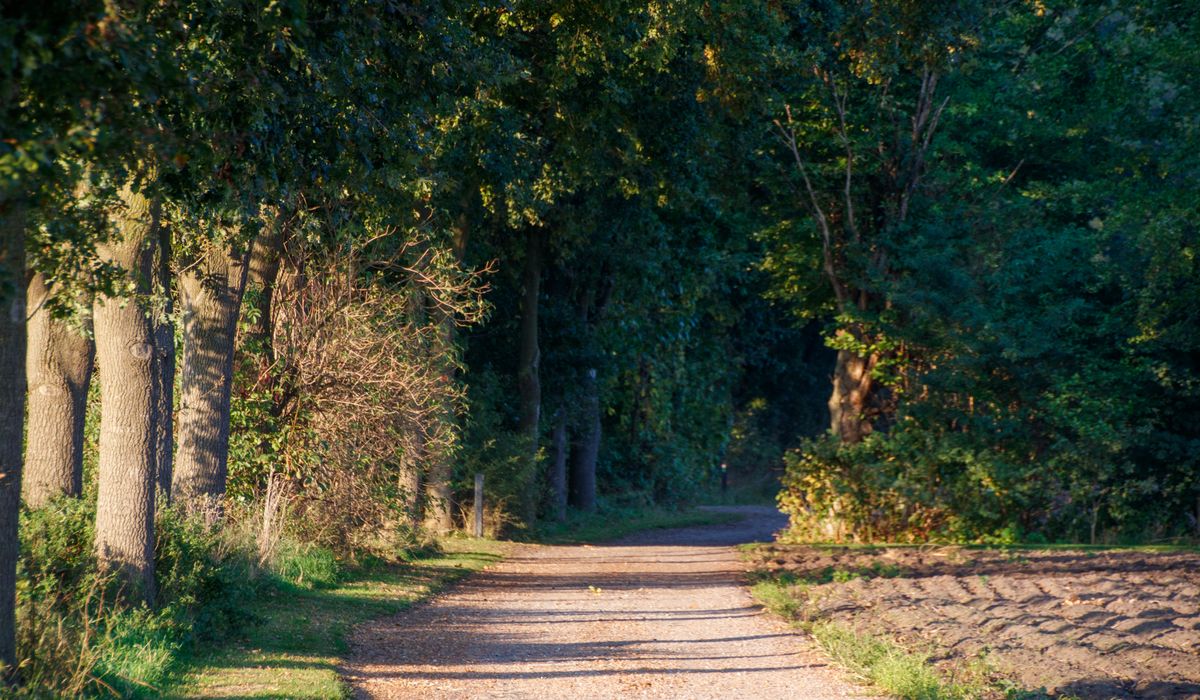
Once you are on foot, the slowness continues. Hedge banks, a stone bridge, the smell of a wood after rain. This is the stage where the journey stops being transport and becomes attention.
What slow travel does for your wellbeing
There is a reason this feels different. Researchers who study attention suggest that natural environments rest the directed focus we exhaust on screens, timetables and traffic. A train window gives you a moving version of that: an hour of unremarkable landscape passing at the speed of a bicycle, with nothing to do about any of it.
The waiting does something too. Boredom is not emptiness; it is the mind wandering into ideas it never reaches when it is being fed. Add birdsong, a river, and a horizon you can see the weather coming across, and you have the ingredients most people travel abroad to find.
A gentle rule for a slow weekend: one village, one long walk, one good meal, and no more than two train journeys a day. Let the timetable set the pace rather than fighting it. Book the last train home with an hour to spare, then use that hour sitting on a platform doing absolutely nothing — and notice how rare that has become.
LEAVE A COMMENT